
Helping children and young people enjoy the water safely
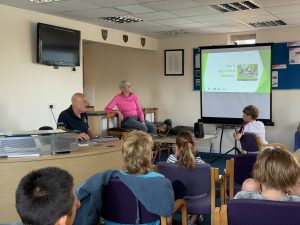 Longer periods of warm weather are encouraging more people to spend time in and around rivers, lakes, docks, ponds and coastal waters. Sadly, each summer also brings reports of children and young people getting into difficulty and losing their lives.
Water should be enjoyed, and simply telling young people to stay away from it is unlikely to work. A more realistic approach is to help them understand the dangers, recognise when a situation is unsafe and know what to do if something goes wrong.
Working with Hull City Council and Hull Culture and Leisure, Dave Rawding, one of Kingston Kayak Club’s senior coaches, has brought together a comprehensive collection of water-safety information, videos, teaching ideas and practical activities.
A resource for community organisations
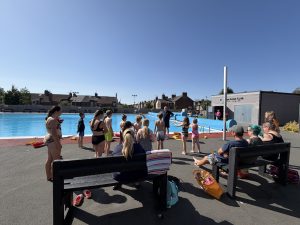 The Community Water Safety presentation has been created for schools, youth groups, sports clubs, voluntary organisations and other community groups working with children, young people and families.
It is not intended to be a definitive training course or a replacement for recognised lifesaving, first-aid or rescue qualifications. Instead, it provides a flexible collection of resources from which a facilitator can build an age-appropriate session for their particular group.
The material can be used for:
- Short water-safety awareness talks
- Classroom or youth-group discussions
- Scenario-based learning
- Parent and guardian information sessions
- Supervised practical sessions in a suitable pool or water environment
- Signposting to trusted national water-safety organisations
Sessions should be tailored to the age, ability and needs of those taking part. Practical activities must only be delivered in an appropriately supervised and controlled environment.
Education, not fear
The purpose of this initiative is not to frighten children or stop them having fun.
Young people will continue to swim, paddle, fish, play and spend time beside the water. Giving them accurate information allows them to make better decisions, recognise hazards and resist dares or peer pressure.
The presentation encourages an approach that is:
Practical. Memorable. Honest. Empowering.
It focuses on a small number of behaviours that could save a life.
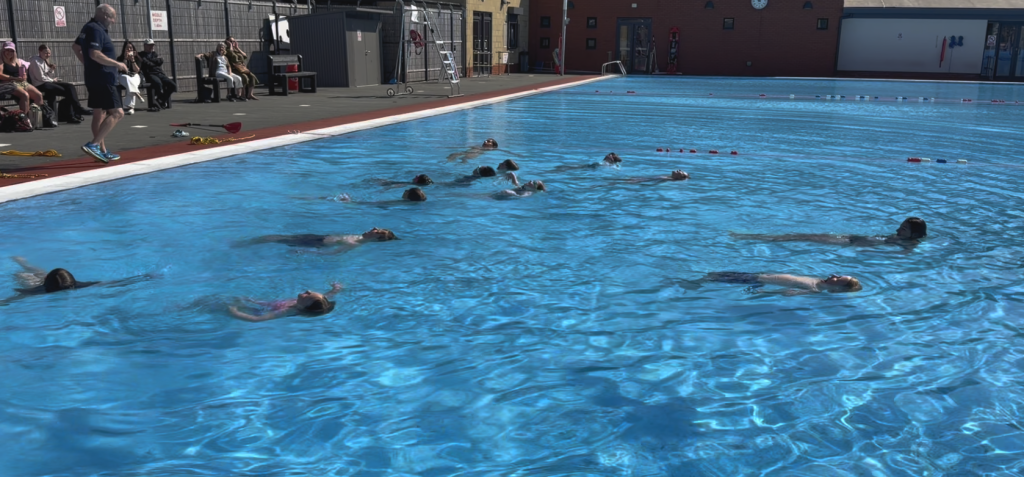
If you get into difficulty: Float to Live
Falling unexpectedly into cold water can cause an immediate gasp response, rapid breathing and panic. The instinct may be to swim hard, but this can quickly lead to exhaustion.
The RNLI’s advice is to Float to Live:
- Tilt your head back, allowing your ears to go beneath the surface.
- Relax and try to control your breathing.
- Move your hands and feet gently to help you remain afloat.
- Do not worry if your legs sink—everyone floats differently.
- Once your breathing is under control, call for help or swim to safety.
The RNLI recommends practising floating in a safe, supervised environment so that you know what works for you.
If someone else is in difficulty: do not jump in
The natural reaction when a friend or family member is struggling may be to enter the water and try to rescue them. Unfortunately, this can turn one casualty into two.
The most important message is:
Help them—but do not enter the water yourself.
Remember:
Shout
Call for help and reassure the person. Encourage them to remain calm and float on their back.
Reach
From a safe and stable position, reach with something long, such as a pole, paddle, branch or piece of clothing. Stay low, brace yourself and do not lean so far that you could be pulled in.
Throw
Throw something that floats, such as a lifebuoy, throwline, football, empty container or other buoyant object.
Call 999
Give the emergency services your location, what has happened, how many people are involved and whether they are still in the water.
Never go
Unless you are specifically trained and equipped to conduct a water rescue, do not enter the water.
The order of priorities
The presentation introduces a simple order for dealing with an emergency:
1. Self
Keep yourself safe. You cannot help anyone if you also become a casualty.
2. Group
Move other people away from the edge, prevent panic and send someone to get help.
3. Casualty
Reassure the person and help them by shouting, reaching or throwing.
4. Kit
Phones, footballs, bicycles, fishing equipment, boats and paddles can all be replaced. A life cannot.
Self. Group. Victim. Kit.
Repeating this order during scenarios can help it become an instinctive response.
Understanding local risks
Hull and the surrounding area contain many different water environments, including:
- The River Hull
- The Humber Estuary
- Docks and marinas
- Drains and flood channels
- Lakes and fishing ponds
- Coastal and tidal waters
Hazards may include cold water, strong currents, tidal movement, sudden changes in depth, slippery or unstable banks, submerged objects, poor water quality and difficulty finding a safe exit.
Being a confident swimmer does not remove these risks. Open water is very different from a swimming pool.
A growing part of water-safety education
From 1 September 2026, revised statutory Relationships, Sex and Health Education guidance for schools in England includes recognising risks and staying safe around water, including the Water Safety Code.
The Water Safety Code is designed to give people simple information that helps them make safer decisions around water and respond appropriately in an emergency.
Kingston Kayak Club supports the wider effort to make sure children and young people receive these messages before they need them.
Download the Community Water Safety presentation
The presentation contains facilitator notes, videos, scenarios, practical activities and links to resources from organisations including the RNLI, Royal Life Saving Society UK, Humberside Fire and Rescue Service and the Swimming Teachers’ Association.
Please review and adapt the material before delivering it to your group. Some sections are intended for particular ages or audiences and would not normally be included in a short introductory session.

https://www.kkc.org.uk/wp-content/uploads/2026/07/Water-Safety-Video-Links.pptx

https://www.kkc.org.uk/wp-content/uploads/2026/07/Water-Safety-Video-Links-and-Notes-.pdf
Further information
For further information about the presentation or Kingston Kayak Club’s community water-safety work, please contact:
Dave Rawding
Senior White Water Coach
Kingston Kayak Club
Telephone: 07817 611249
Email: dave.rawding@me.com
Anyone can drown. No one should.