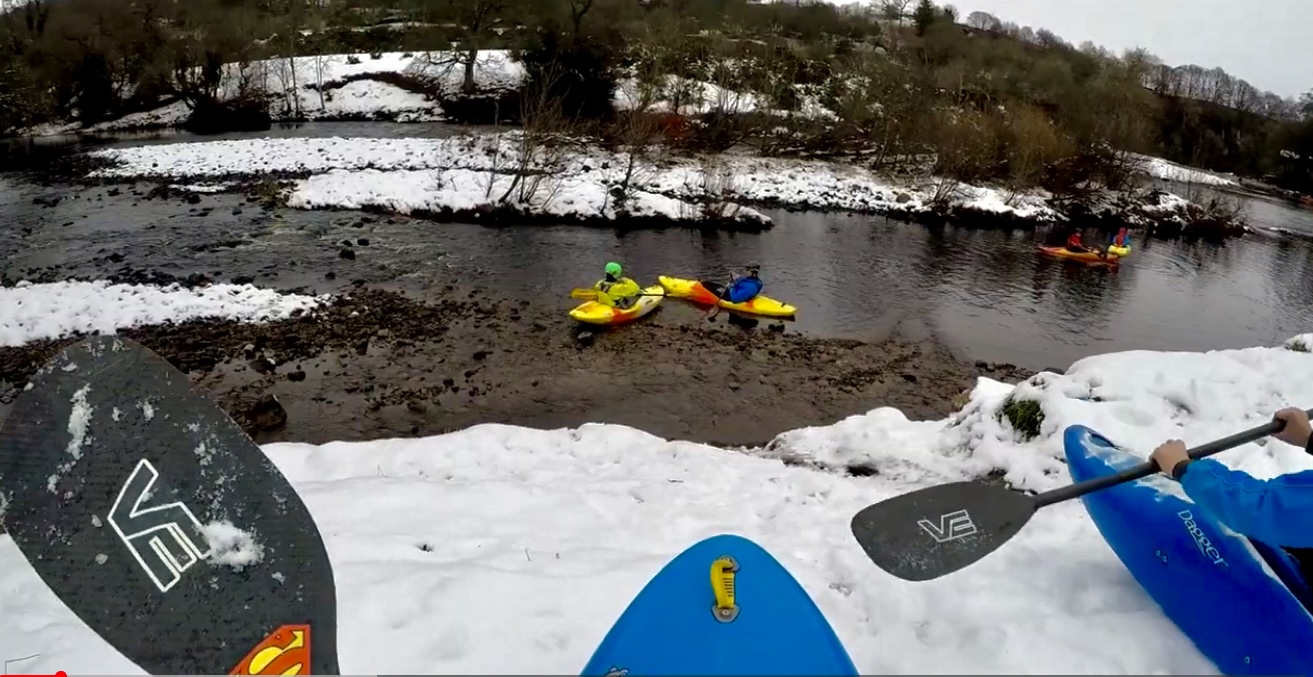
The temperatures have dropped, the mornings are frosty, and winter has well and truly arrived. But that doesn’t mean we have to put our paddles away until spring.
Whether you’re joining us at the Albert Avenue outdoor pool, heading out for a gentle river trip or tackling some white water, there’s still plenty of paddling to enjoy throughout the colder months.
The secret is choosing the right clothing for you, the activity and the conditions.
And no, putting another hoodie over your T-shirt isn’t necessarily the answer.
Dress for the Water, the Weather and the Activity
One of the biggest things to understand about paddling clothing is that there isn’t one solution that works for everyone.
Some paddlers naturally feel the cold more than others. What one person considers comfortable, another might find absolutely freezing.
The type of paddling you’re doing also makes a considerable difference.
If you’re sprinting around the pool playing canoe polo or working hard during a slalom training session, you’ll generate considerably more heat than someone enjoying a gentle paddle along a river.
Wear too much during a high-intensity session and you can become uncomfortable, overheat and sweat excessively. Wear too little on a leisurely paddle and you could struggle to stay warm.
When choosing your clothing, consider:
-
Water temperature: What happens if you capsize or end up swimming?
-
Air temperature and wind: How quickly might you cool down?
-
Activity level: Will you be sprinting and working hard or paddling gently?
-
Personal preference: Do you naturally run hot or feel the cold?
-
Duration and location: How long will you be on the water, and how easily could you get somewhere warm?
-
Freedom of movement: Can you still paddle, exit your kayak and swim safely?
And remember, it’s generally much easier to cool down during winter than it is to warm yourself back up once you’ve become seriously cold.
The aim is to avoid getting too cold in the first place, without becoming so warm that you overheat.
1. Outdoor Pool Sessions – Albert Avenue
Our outdoor pool sessions continue throughout the colder months, but what you wear will depend very much on what you’re doing.
Canoe Polo and Slalom Training
Both canoe polo and slalom can involve short bursts of intense activity.
During a hard polo game or demanding slalom fitness session, you’ll generate plenty of heat, even on a cold evening.
You may find that a thermal top and a suitable paddling cagoule provide enough protection while you’re working hard. Someone else might prefer a wetsuit or additional insulation.
There is an element of personal preference, and you’ll gradually learn what works for you.
However, you still need to consider the possibility of capsizing, swimming or spending time waiting between activities.
Options worth considering include:
-
Synthetic or merino wool thermal base layers.
-
A paddling cagoule to provide protection from wind and spray.
-
Neoprene shorts, trousers or a suitable wetsuit.
-
Neoprene footwear.
-
Gloves or pogies if your hands get particularly cold, provided they don’t interfere with safe paddling.
The Advantage of Paddling at the Club
One of the benefits of our outdoor pool sessions is that you’re never far from somewhere warm.
If you become cold, you can get off the water. We have warm showers and a heated clubhouse where you can get changed and warm up.
That makes managing your temperature much easier than being several miles down a river.
If you’re getting cold during a session, don’t feel you have to keep going. Let your coach know and take the opportunity to warm up.
And always bring a complete change of dry clothing for afterwards.
2. Flat-Water River Trips – Staying Warm Away From the Club
Winter river trips can be fantastic. Quiet waterways, beautiful scenery and sometimes even a little sunshine.
However, the clothing you choose becomes particularly important when you’re away from the facilities at Albert Avenue.
On a river trip, you could be several miles from your vehicle or the nearest suitable place to get off the water.
If you become cold, you might not have the option of getting out, having a warm shower or sitting in a heated clubhouse.
And it’s worth remembering that once you’ve become very cold, warming yourself up again can be difficult, particularly when you’re exposed to wind and wet conditions.
A gentle river trip also generally involves less physical exertion than a hard polo or slalom session, so you may need more insulation to stay comfortable.
Think About Your Layers
A sensible approach is to combine:
-
Base layer: Good-quality merino wool or synthetic thermals.
-
Insulation: Additional thermal layers, a thin fleece or a paddling-specific onesie.
-
Outer protection: A suitable paddling cagoule and trousers, or a drysuit where appropriate.
Doubling up on thermal layers can be a very effective way of staying warm.
A thin fleece can also provide additional insulation, but avoid thick, bulky fleeces that restrict your movement or make your outer clothing too tight.
The Club Has Clothing You Can Borrow
You don’t need to buy an expensive paddling wardrobe before joining a Club river trip.
Kingston Kayak Club has a selection of outer clothing available for members to borrow, including:
-
Paddling cagoules.
-
Reed Chillcheater dry cagoules.
-
Reed Chillcheater paddling leggings.
These can be combined with your own thermal clothing to provide suitable protection for many river trips, depending on the conditions.
Please speak to the trip organiser or a coach beforehand so we can discuss what’s suitable and what equipment is available in your size.
Remember, separate dry cagoules and leggings don’t necessarily provide the same level of immersion protection as a correctly fitted full drysuit.
Always Carry Spare Clothing
For river trips, it’s sensible to carry spare thermal clothing in a waterproof drybag.
Think about what you would need if you capsized, became wet or had to spend an unexpected amount of time off the water.
A warm hat, extra layers, food and a hot drink can all be useful.
And avoid cotton clothing such as jeans and ordinary hoodies. Cotton absorbs water, loses much of its insulating ability when wet and takes a long time to dry.
3. White Water – Be Prepared to Get Wet
White-water paddling brings different challenges.
You may work very hard negotiating rapids, making breakouts and practising skills, but you can also spend considerable time sitting in eddies, inspecting features or standing on the riverbank.
And there’s always the possibility of going for an unexpected swim.
For winter white-water paddling, a drysuit can make an enormous difference.
Drysuits – Expensive, but a Game Changer
There’s no getting away from it: a good-quality drysuit is expensive.
However, for regular cold-weather white-water paddling, it can be one of the best investments you’ll make.
A properly fitted drysuit helps keep water out, allowing you to wear insulating layers underneath without them immediately becoming saturated during immersion.
It doesn’t provide much insulation by itself, though. What you wear underneath is equally important.
What Do I Personally Wear?
As an example, when I’m heading out on white water during the colder months, my usual clothing combination is:
-
Socks.
-
Merino wool thermal top.
-
Palm paddling thermal onesie.
-
Drysuit.
-
Paddling boots.
-
Spraydeck.
-
Buoyancy aid.
-
Helmet with plenty of suitable padding, both for safety and a little additional warmth.
That’s my personal setup, developed through experience and knowing how I respond to the cold.
It works for me, but it doesn’t mean it’s the perfect combination for everybody.
Different paddlers, river conditions and activity levels may require different layers.
The important thing is choosing equipment that keeps you appropriately protected without compromising your ability to paddle and respond to an unexpected swim.
Your helmet must also fit correctly. Never add unsuitable padding that could interfere with its protective performance.
4. Don’t Forget Your Head
We lose heat from any exposed part of the body, and your head is no exception.
A warm hat can make a noticeable difference to your comfort, particularly when you’re standing around between activities or taking a break.
For gentle flat-water paddling, a bobble hat may be a comfortable option where a helmet isn’t required by the activity or Club arrangements.
For white water and other activities requiring head protection, wear a suitable, correctly fitted paddling helmet.
A thin, compatible thermal liner may be useful beneath some helmets, provided it doesn’t interfere with the fit or protection.
And if you fancy a new bobble hat, the Kingston Kayak Club Clothing Store has some great Club bobble hats available.
It’s a nice way to stay warm while showing your support for the Club.
5. Investing in Good Thermal Layers
If you’re thinking of investing in some paddling clothing, I’d suggest starting with quality thermal layers.
These are versatile, can be used across a range of paddling activities and are generally considerably less expensive than specialist outerwear.
Merino Wool Thermals
Merino wool is popular with outdoor enthusiasts because it provides good insulation, manages moisture and continues to offer some warmth when damp.
A good-quality merino thermal top and leggings can form the foundation of your winter paddling clothing.
Paddling-Specific Thermal Onesies
A paddling onesie is another option worth considering.
These are designed to be worn beneath paddling outerwear and can help avoid gaps between your top and trousers when sitting in a kayak.
They also come in different levels of insulation.
You might prefer something lightweight for higher-intensity activities and a warmer option for slower paddling or colder conditions.
Two Thin Layers or One Thick Layer?
Sometimes two thinner thermal layers can be more useful than one thick layer.
They give you flexibility to adjust your clothing and often allow better movement.
A thin fleece can also be effective, but I’d avoid thick, bulky fleeces beneath paddling outerwear.
The key is to retain enough space for comfortable movement and effective insulation.
6. Layering – More Isn’t Always Better
It’s tempting to think that the colder the weather, the more clothing you should put on.
But too many layers can create problems.
Bulky clothing can restrict shoulder movement, torso rotation and your ability to sit comfortably in a kayak.
And there’s another important consideration: you must still be able to exit your kayak and swim if something goes wrong.
When trying on your winter paddling clothing, think about whether you can:
-
Rotate your torso freely.
-
Raise your arms and perform paddling strokes.
-
Reach forwards and move around comfortably.
-
Exit your kayak safely following a capsize.
-
Swim effectively while wearing all your equipment.
-
Avoid overheating when paddling hard.
Remember that insulating layers work partly by trapping air. If you squeeze too much clothing beneath tight outerwear, you can compress the insulation and reduce its effectiveness.
The aim isn’t to wear as much clothing as possible.
It’s to wear the right combination of layers for your activity, the conditions and your own comfort.
7. Cold Water Shock – A Serious Consideration
While comfort is important, cold-water safety must always come first.
Water below 15°C can trigger cold water shock, causing involuntary gasping, rapid breathing and difficulty controlling your breathing.
This can affect experienced paddlers just as much as beginners.
Prolonged immersion can also lead to a gradual loss of strength, coordination and body heat.
That’s why it’s important to consider what happens if you capsize, even if you’re confident you won’t end up swimming.
Appropriate clothing, correctly fitted buoyancy aids, suitable equipment and sensible decisions about conditions all form part of paddling safely.
Our Winter Paddling Checklist
Before heading out, ask yourself:
-
Am I dressed appropriately for the activity and conditions?
-
Have I considered how warm I’ll become once I start paddling?
-
Will my clothing provide suitable protection if I capsize?
-
Can I paddle, exit my kayak and swim safely?
-
Do I have suitable footwear and headwear?
-
Can I get somewhere warm if I become cold?
-
Have I packed warm, dry clothing for afterwards?
-
Do I need additional spare clothing for a river trip?
-
Have I checked what equipment the Club can lend me?
-
Have I discussed any concerns with the coach or trip organiser?
You Don’t Have to Spend a Fortune
We appreciate that paddling equipment can be expensive, particularly for families with growing children.
Not everyone needs to rush out and buy a brand-new drysuit for their first winter session.
A decent set of thermal layers is often a sensible starting point, and the Club has paddling outerwear available for members to borrow on river trips.
As you gain experience, you’ll develop a better understanding of what works for you and the paddling you enjoy.
If you decide to paddle regularly throughout the winter, particularly on white water, investing in a drysuit may eventually be worthwhile.
Before spending money on expensive equipment, speak to one of our coaches. We can help you understand the options and avoid purchases that might not be suitable for your paddling.
Keep Paddling This Winter
Winter doesn’t mean we have to put the kayaks away until spring.
With sensible clothing choices, appropriate equipment and a little preparation, there’s still plenty of fun to be had on the water.
Remember, the right clothing for someone sprinting around a canoe polo pitch might be completely unsuitable for someone enjoying a gentle river paddle.
Dress for the conditions, think about your activity level, layer sensibly and make sure you can still move freely.
And if you’re not sure what to wear, just ask.
Kingston Kayak Club – Canoeing and Kayaking for All.