

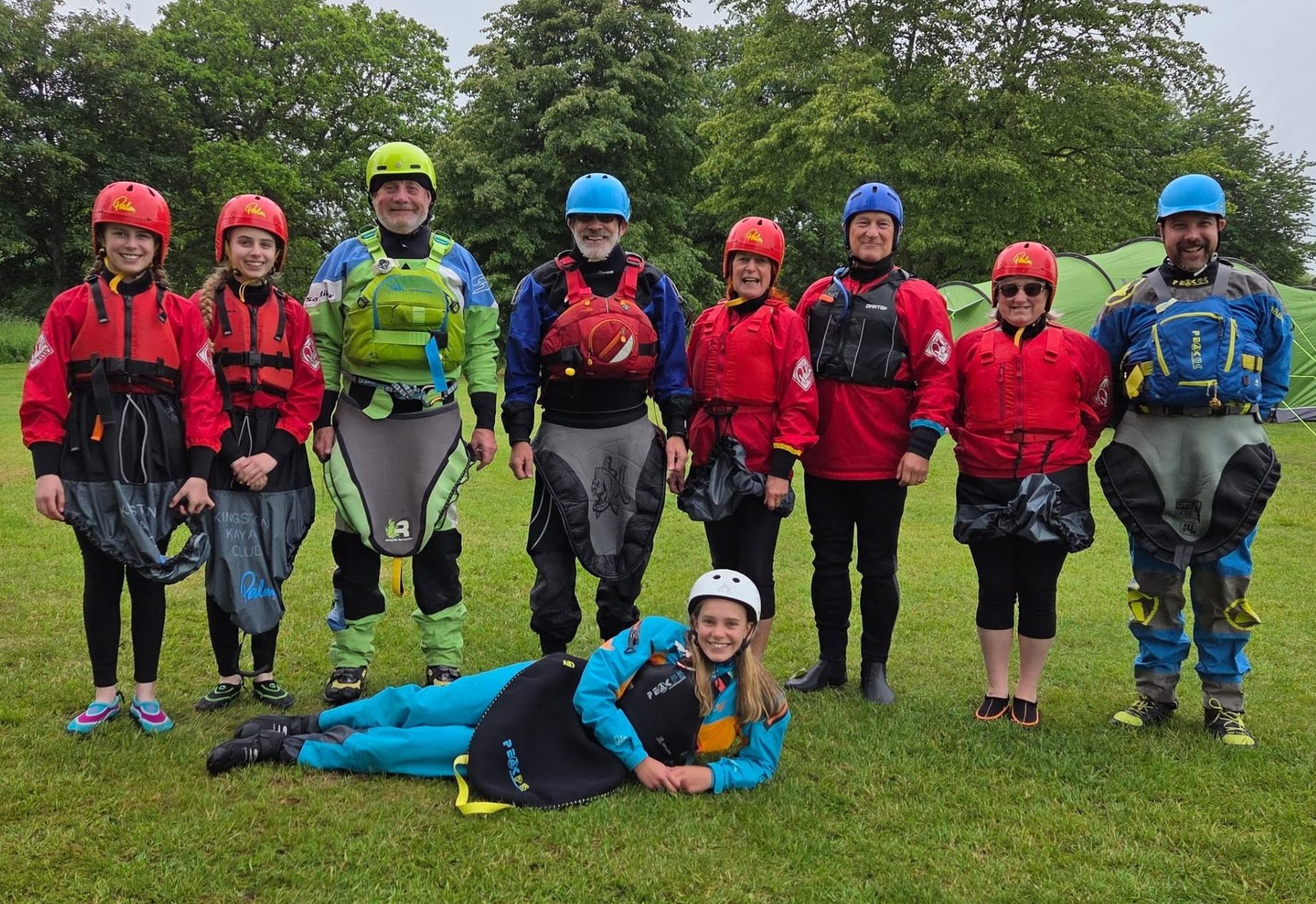
At Kingston Kayak Club, our trips and weekends away are a huge part of what makes the Club special.
They give paddlers the chance to try new places, build confidence, spend time with friends, and enjoy paddlesport as part of a wider Club community. They are also often family weekends, where parents, carers, siblings and supporters come along and share the experience, whether or not they paddle themselves.
We are very proud of that. It is something we want to continue.
Following our recent Club Camping Weekend, we invited feedback from members and families. We are grateful to everyone who took the time to share their thoughts. Much of the feedback was very positive, particularly about the quality of coaching, the support provided on the water, and the effort that goes into organising these events.
We have also listened carefully to comments about how we can improve future trips, especially around communication, trip options, suitability to paddle, and making sure everyone has enough information to make informed decisions.
As a result, the Committee and coaching team have been reviewing how we plan and communicate future Club trips and weekends.
Keeping Trips Safe, Inclusive and Enjoyable
Our aim is simple: we want Club trips to be safe, inclusive, enjoyable and well organised.
Paddlesport will always involve some level of challenge and risk. Part of the enjoyment comes from learning new skills, trying different environments and building confidence. However, it is important that paddlers and parents understand what a trip is likely to involve before deciding whether it is right for them or their family.
In future, we will aim to provide clearer information before trips, including:
-
who the overall trip leader is;
-
what type of paddling is planned;
-
the approximate distance and expected time on the water;
-
the likely level of challenge;
-
whether the trip may include moving water, white water or rapids;
-
whether the route has limited stopping or exit points;
-
what experience or confidence level is needed;
-
whether alternative paddling options are available;
-
what facilities are available at the start and finish.
This will help paddlers and families make more informed choices.
Family Weekends and Suitability to Paddle
Our Club Weekends will continue to be family-friendly events. Parents, carers, siblings and supporters are very welcome, and the social side of these weekends is an important part of Club life.
However, attending a Club Weekend does not automatically mean that everyone will be suitable to paddle on every activity.
Paddling will always be subject to the conditions, the route, coach availability, equipment, group size, and the ability and confidence of those wishing to paddle.
There may be occasions where the trip leader or coaching team has to say:
“Unfortunately, the conditions are not suitable for you to paddle today.”
That decision is never personal. It is part of keeping everyone safe.
We would much rather someone feel disappointed that they could not paddle on a particular day than have them feel unsafe, overwhelmed or put at unnecessary risk.
Making Trip Options Clearer
Where possible, we will continue to offer different paddling options so that a weekend can work for a range of abilities.
However, we also need to be realistic. Separate options depend on having suitable water, suitable access, suitable equipment, enough coaches and appropriate conditions on the day.
In future, if we say there will be different options, we will aim to be clearer about whether those options are definite or whether they depend on conditions and coach availability.
This is one of the reasons we are looking at future venues carefully. For example, a location such as Bala gives more flexibility, with access to sheltered water and more challenging paddling nearby, depending on the conditions and the group.
Better Briefings Before We Paddle
We are also introducing a clearer trip briefing checklist for leaders and coaches.
This will help make sure important points are covered before paddlers get on the water, including:
-
the route;
-
the expected conditions;
-
known hazards;
-
the level of challenge;
-
group structure;
-
what to do in the event of a capsize;
-
communication arrangements;
-
stopping or regrouping points;
-
whether there are any concerns before launching.
We want paddlers and parents to feel able to ask questions and raise concerns. If someone is unsure, we would rather they say so before getting on the water. That gives the coaching team the chance to adapt the plan, offer reassurance, or advise that the paddle may not be right for that person on that day.
Route Planning and Changing Conditions
For future trips, we will continue to consider river levels, weather, local knowledge, coach judgement and the ability of the group.
Where practical, coaches may inspect or assess sections of a route in advance. However, it is not always possible to paddle a full route the day before or earlier on the day, and conditions can change.
What we can do is communicate more clearly how decisions have been made and what factors have been considered.
Capsizes, Incidents and Near Misses
Capsizing is a normal part of paddlesport, especially on moving water. Not every capsize is an incident or near miss.
However, some situations do need to be recorded and reviewed, particularly where there is distress, risk of injury, coach intervention, junior paddlers involved, or useful learning for the Club.
We are strengthening our approach to recording and reviewing incidents, near misses and safety concerns. The aim is not to blame people, but to learn and improve.
A well-managed situation can still provide important learning.
Changing Facilities at the End of Trips
We have also received feedback about changing arrangements at the end of river trips.
We recognise that changing can be difficult where there are limited facilities, especially when paddlers are wet, cold or tired.
However, it is not feasible for the Club to provide a dedicated changing van. The cost of purchasing, insuring, maintaining and storing such a vehicle would be prohibitive. It would also not be appropriate to use volunteers’ personal vehicles as changing facilities.
For future trips, we will try to make clearer what facilities are likely to be available at the start and finish. Where there are limited or no changing facilities, paddlers should come prepared with suitable towels, warm clothing, waterproof bags and, where possible, a changing robe or dry robe.
The Club cannot provide changing robes for all paddlers, but they are a practical solution that many paddlers and families may wish to consider.
Supporting Our Coaches and Volunteers
None of these trips happen without volunteers.
Our coaches and leaders give up a huge amount of time to support the Club. They plan trips, move equipment, coach on the water, manage groups, support paddlers, and take responsibility for safety decisions.
We are very grateful for everything they do.
We also know that the Club has a limited number of qualified coaches and leaders. This affects how many groups we can run and what options we can offer. We will continue to encourage members to consider coaching and leadership pathways so that we can offer more opportunities in the future.
Thank You for the Feedback
We are grateful to everyone who has shared feedback. It helps the Club improve.
The important message is this: we are listening, we are learning, and we are making changes.
Kingston Kayak Club will continue to offer adventurous, enjoyable and family-friendly paddling opportunities. We will also continue to improve how we communicate, plan and support people so that members can take part with confidence.
Our aim is for future trips to be safe, clear, inclusive and enjoyable for everyone involved.